

Why Are PVC Bathroom Wall Panels Preferred for High-Moisture Applications?
2026-09-29
A hotel renovation project has 120 bathrooms to complete in 10 weeks. The specification calls for ceramic tile on all wet walls. The tiling contractor estimates 3 days per bathroom for tiling, grouting, and curing. That is 360 working days, which cannot be compressed into the schedule without adding multiple crews. The project manager asks for an alternative. The answer is a PVC Wall Panel system that can be installed in 4 to 6 hours per bathroom, with no curing time and no grout lines. This is not a compromise on quality. It is a different approach to the same problem: protecting the wall substrate from moisture. This guide explains why PVC wall panels are preferred for high-moisture applications and how they perform compared to traditional materials.
1. What Makes Traditional Bathroom Wall Materials Vulnerable to Moisture?
Tile is not waterproof. The tile itself is water-resistant, but the grout lines and the adhesive behind the tile are porous. Water vapor passes through the grout and reaches the substrate. If the substrate is gypsum board or plywood, it absorbs the moisture and swells. Over time, the swelling causes the tile to debond and the grout to crack. Once the grout cracks, water enters more freely, and the problem accelerates. Mold grows in the damp substrate and appears in the grout lines. The table below shows the moisture-related failure modes of traditional bathroom wall materials.
| Material | Moisture vulnerability | Typical failure time | Failure mode |
| Ceramic tile on gypsum board | Grout and adhesive are porous | 2 – 4 years | Grout cracking, tile debonding, mold |
| Ceramic tile on cement board | Grout is porous; cement board is moisture resistant | 4 – 8 years | Grout discoloration, mold in grout |
| Painted drywall | Paint is not waterproof | 1 – 2 years | Peeling, bubbling, mold |
| Wallpaper | Paper absorbs moisture | 6 – 12 months | Peeling, mold, discoloration |
In our factory, we have examined failed tile installations from hotels and apartments. The common finding is that the moisture damage is not in the tile but in the substrate and the grout. The tile itself is still intact. The repair requires removing the tile, replacing the substrate, and re-tiling. This is expensive and disruptive. A PVC Wall Panel avoids this problem because the panel itself is waterproof and the joints are sealed with a waterproof sealant.
2. How Does PVC Wall Panel Resist Moisture and Mold?
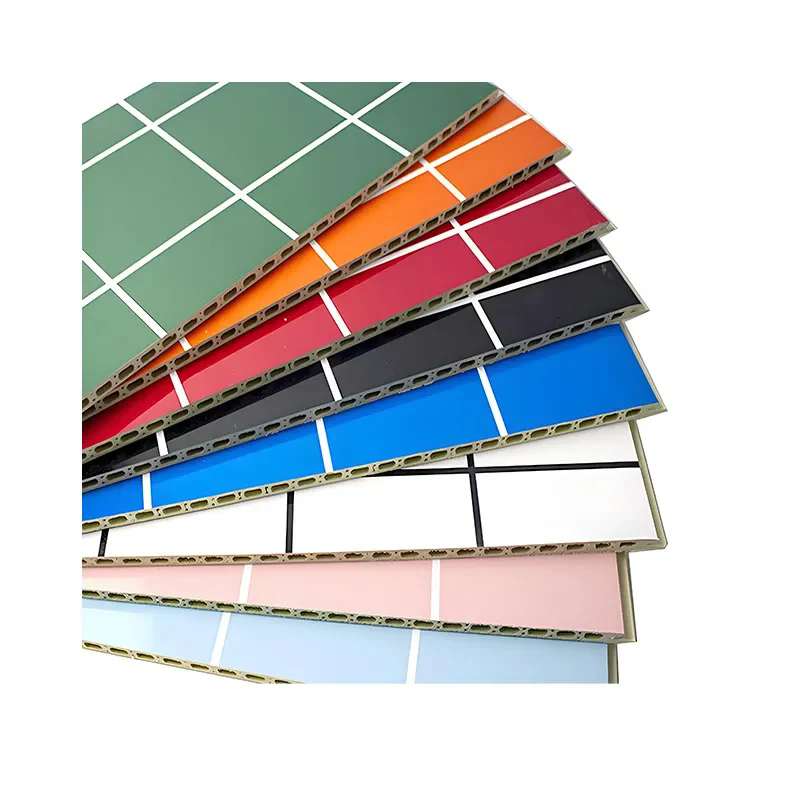
A PVC Wall Panel is made from polyvinyl chloride, which is a thermoplastic polymer. PVC does not absorb water. It is not a food source for mold or bacteria. The panel has a solid core or a foam core, depending on the product. The surface is a printed film that is bonded to the PVC. The joints between panels are sealed with a silicone or PVC sealant. The table below shows the moisture performance of PVC wall panels compared to traditional materials.
| Performance parameter | PVC Wall Panel | Ceramic tile | Painted drywall |
| Water absorption | < 0.1% | < 0.5% (tile) but grout absorbs | > 5% (drywall) |
| Mold resistance | Excellent (no organic food source) | Moderate (grout supports mold) | Poor |
| Water vapor transmission | Near zero | High through grout | High |
| Joint sealing | Silicone sealant (waterproof) | Grout (porous) | Caulk (degrades) |
| Expected life in wet area | 15 – 20 years | 4 – 8 years (before grout failure) | 1 – 2 years |
Haining Retent Decoration Materials Co., Ltd. manufactures PVC Wall Panel units with a density of 1.4 to 1.6 grams per cubic centimeter and a thickness of 5 to 10 millimeters. Our factory tests every batch for water absorption according to ASTM D570. The water absorption is typically less than 0.05 percent, which is negligible.
3. How Does Installation Time Compare for Renovation Projects?
Installation time is a critical factor in renovation projects, especially in hotels, apartments, and commercial buildings where each day of downtime has a cost. A PVC Wall Panel system is installed using adhesive and mechanical fasteners. The panels are cut to size on site and fixed to the wall. No wet trades are required. No curing time is needed. The bathroom can be returned to service immediately after installation. The table below compares the installation time for a standard 5 square meter bathroom.
| Installation step | Ceramic tile | PVC Wall Panel |
| Surface preparation | 1 – 2 days (leveling, waterproofing) | 2 – 3 hours (cleaning, minor repair) |
| Adhesive application | 1 day (thin-set) | 1 hour (construction adhesive) |
| Tile/panel installation | 2 – 3 days | 3 – 4 hours |
| Grouting/sealing | 1 day + 24 hours curing | 1 hour (silicone sealant) |
| Total time per bathroom | 5 – 7 days | 6 – 8 hours |
The time saving is 85 to 90 percent. For a hotel with 120 bathrooms, the tiling method would require 600 to 840 working days. The PVC Wall Panel method requires 720 to 960 working hours, which is 90 to 120 working days for a crew of 8. This allows the hotel to reopen the bathrooms in phases and generate revenue sooner. In our factory, we have supplied PVC Wall Panel units to hotel renovation projects in Europe and Southeast Asia. The project managers consistently report that the installation time is the primary reason for selecting the panel system.
4. How Should the Substrate and Joints Be Prepared for PVC Wall Panels?
The substrate must be clean, dry, and flat. The maximum allowable deviation is 3 millimeters over 2 meters. If the substrate is uneven, the panels may not sit flush, and the joints may open. For renovation projects, the old tile can sometimes be left in place if it is well bonded and flat. This saves the cost and time of removal. The joints between panels should be sealed with a neutral cure silicone sealant. The sealant should be applied to a clean, dry surface and tooled to a smooth finish. The table below shows the substrate and joint requirements.
| Requirement | Specification | Consequence of non-compliance |
| Substrate flatness | ≤ 3 mm over 2 m | Panel distortion, open joints |
| Substrate moisture content | < 10% (wood) or dry (concrete) | Adhesive failure, mold growth |
| Substrate cleanliness | Free of dust, oil, and loose material | Poor adhesive bond |
| Joint sealant | Neutral cure silicone | Joint failure, water ingress |
| Sealant cure time | 24 hours before water exposure | Sealant washout |
Field tip: For renovation projects where the old tile is left in place, we recommend sanding the tile surface with a coarse grit to improve the adhesive bond. We also recommend using a primer on the tile surface before applying the adhesive. This simple step increases the bond strength by 40 to 60 percent. Haining Retent Decoration Materials Co., Ltd. provides a surface preparation guide with every order.
Frequently Asked Questions About PVC Bathroom Wall Panels
Summary for Renovation Contractors and Project Managers
PVC Bathroom Wall Panels are preferred for high-moisture applications because they are waterproof, mold-resistant, and fast to install. They eliminate the grout lines that are the primary failure point of tile installations. They can be installed over existing tiles, which reduces demolition cost and waste. The installation time is 85 to 90 percent shorter than tile, which allows projects to be completed faster and with less disruption. For hotels, apartments, and commercial buildings, the time saving translates directly to revenue. Haining Retent Decoration Materials Co., Ltd. has been manufacturing PVC Wall Panel units for over 12 years and supplies to renovation projects worldwide.
Haining Retent Decoration Materials Co., Ltd. manufactures PVC Wall Panel units in a range of colors, patterns, and thicknesses. We provide surface preparation guides and installation training for our customers.